Who is Jesus Christ? Why do billions of people believe in Him? This simple guide explains the life, teachings, death, and resurrection of Jesus Christ and why He is the most influential person in history. Discover who Jesus is, why His life matters, and why billions of people around the world follow Him and believe in Him today?
 Image of Jesus with glowing cross
Who Is Jesus? The Complete Guide to the Life, Teachings, Death, and Resurrection of Jesus Christ
The Most Influential Person in History
Few people in history have influenced the world as deeply as Jesus Christ.
More than two billion people today identify as Christians and believe that Jesus is the Son of God and the Savior of the world. His teachings about love, forgiveness, humility, and faith have shaped civilizations, cultures, and personal lives for over two thousand years.
But many people still ask important questions:
- Who was Jesus really?
- Was He only a teacher or something more?
- Why did He die on a cross?
- Did He truly rise from the dead?
This guide explains the life and message of Jesus in clear and simple language so that new believers, seekers, and people from other faiths can understand who He is and why He matters.
1. The Historical Reality of Jesus
Most historians agree that Jesus of Nazareth lived in the first century in the region known as Judea, which was part of the Roman Empire.
He was born around 6–4 BC and died around AD 30–33.
The main historical sources for His life are found in the four Gospels of the New Testament:
- Gospel of Matthew
- Gospel of Mark
- Gospel of Luke
- Gospel of John
These accounts describe His birth, teachings, miracles, death, and resurrection.
Even many non-Christian scholars accept that Jesus was a real historical figure who gathered followers and was executed by crucifixion under the Roman governor Pontius Pilate.
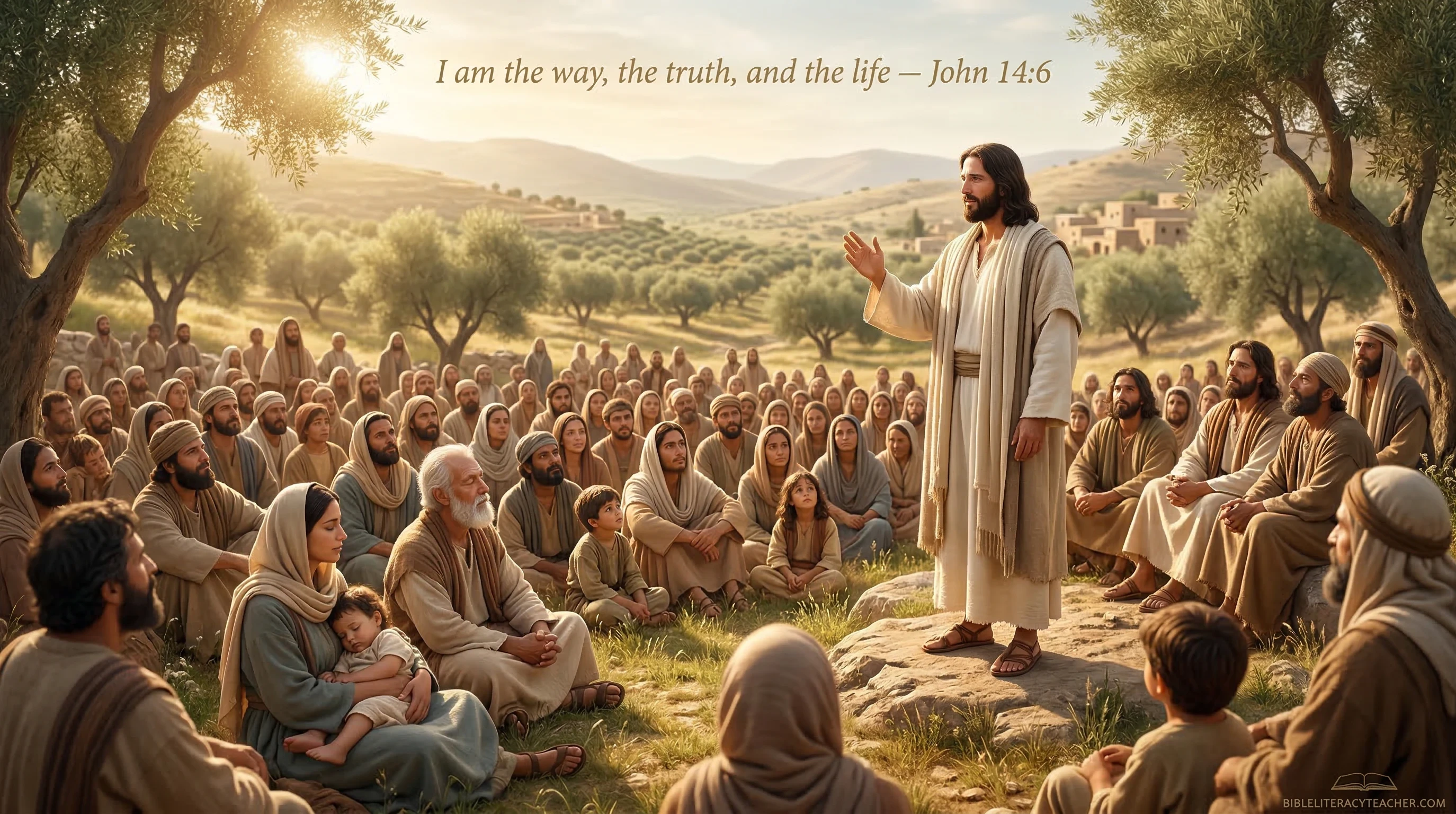 Jesus teaching a large crowd on a hillside in ancient Judea
2. The Birth of Jesus
Jesus was born in Bethlehem and grew up in Nazareth. The Bible teaches that His birth was miraculous. His mother Mary conceived Him through the Holy Spirit.
The angel told Joseph:
“She will give birth to a son, and you are to give him the name Jesus, because he will save his people from their sins.”
— Matthew 1:21 (NIV)
His birth fulfilled prophecies written centuries earlier. The prophet Isaiah wrote:
“The virgin will conceive and give birth to a son, and will call him Immanuel.”
— Isaiah 7:14 (NIV)
The name Immanuel means God with us, which Christians believe describes who Jesus truly is.
Christians celebrate the birth of Jesus each year during Christmas.
3. The Early Life of Jesus
The Bible gives only a few details about Jesus’ childhood. He grew up in Nazareth with His parents Mary and Joseph. Joseph worked as a carpenter, and Jesus likely learned this trade while growing up.
One story describes Jesus at age twelve speaking with teachers in the temple in Jerusalem. People were amazed at His understanding.
“Everyone who heard him was amazed at his understanding and his answers.”
— Luke 2:47 (NIV)
This event hinted that Jesus already had extraordinary wisdom and a unique relationship with God.
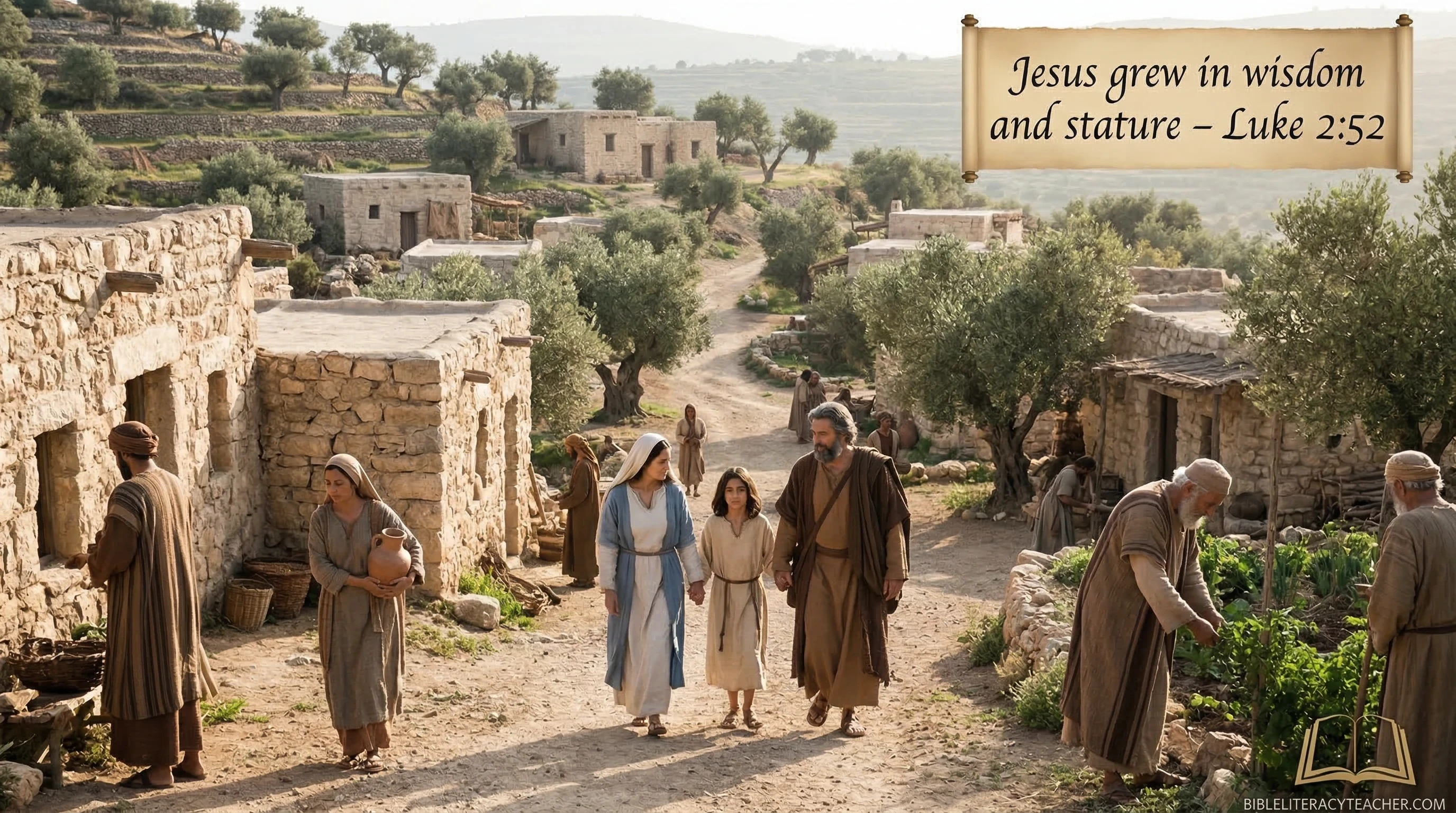 Young Jesus walking with Mary and Joseph in the village of Nazareth
4. The Beginning of His Ministry
Jesus began His public ministry when He was about thirty years old. It started when He was baptized by John the Baptist. At that moment something remarkable happened.
“And a voice from heaven said, ‘This is my Son, whom I love; with him I am well pleased.’”
— Matthew 3:17 (NIV)
After His baptism, Jesus spent forty days fasting in the wilderness before beginning His ministry. He then began traveling through towns and villages teaching about the Kingdom of God.
5. The Message of Jesus Christ
The teachings of Jesus focused on God’s love and how people should live. He summarized the most important commandment this way:
“Love the Lord your God with all your heart and with all your soul and with all your mind.”
— Matthew 22:37 (NIV)
And He added:
“Love your neighbor as yourself.”
— Matthew 22:39 (NIV)
These teachings emphasized:
- love
- humility
- forgiveness
- faith
- compassion for the poor
Jesus challenged people to change their hearts and return to God. One of His famous invitations says:
“Come to me, all you who are weary and burdened, and I will give you rest.”
— Matthew 11:28 (NIV)
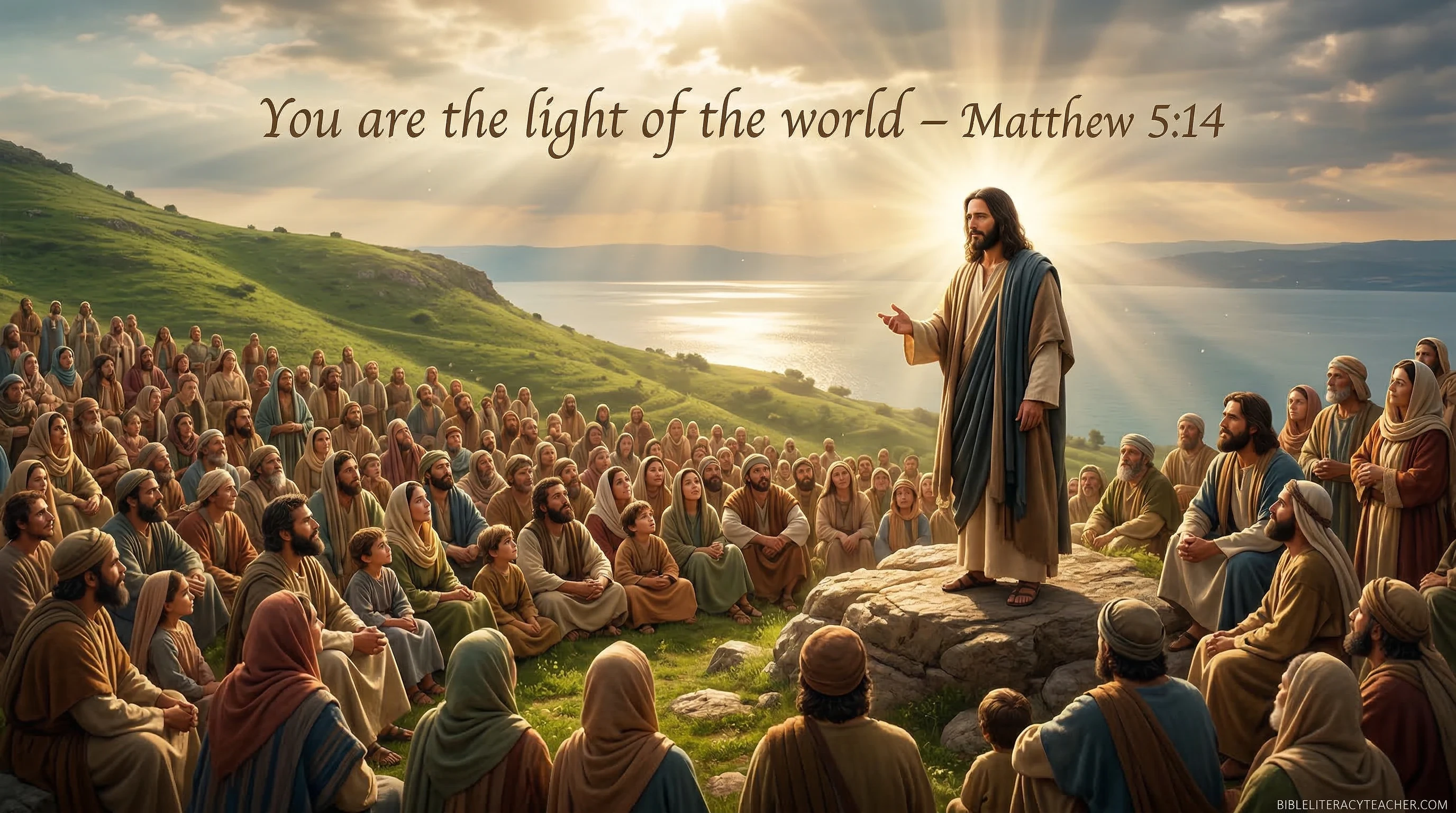 Jesus preaching the Sermon on the Mount
6. The Parables of Jesus Christ
Jesus often taught using parables, which are short stories that reveal spiritual truths. Some of the most well-known parables include:
- The Good Samaritan (Luke 10:25–37)
- The Prodigal Son (Luke 15:11–32)
- The Lost Sheep (Matthew 18:12–14; Luke 15:3–7)
- The Mustard Seed (Matthew 13:31–32; Mark 4:30–32; Luke 13:18–19)
For example, the parable of the lost sheep shows God’s love for every individual.
“I tell you that in the same way there will be more rejoicing in heaven over one sinner who repents than over ninety-nine righteous persons who do not need to repent.”
— Luke 15:7 (NIV)
Through these stories, Jesus made deep spiritual truths easy for ordinary people to understand.
7. The Miracles of Jesus Christ
The Gospels record many miracles performed by Jesus.
These miracles demonstrated compassion for people and revealed divine power.
Examples include:
Healing the sick
Jesus healed many who suffered from diseases and physical infirmities. His healing power demonstrated God’s mercy and His authority over sickness.
“Jesus went throughout Galilee… proclaiming the good news of the kingdom, and healing every disease and sickness among the people.” — Matthew 4:23
Examples include:
- Healing the woman with the issue of blood (Mark 5:25–34)
- Healing Peter’s mother-in-law (Matthew 8:14–15)
- Healing the paralytic (Mark 2:1–12)
Giving sight to the blind
Jesus restored sight to those who were blind, revealing both His physical and spiritual power to bring light into darkness.
“The blind receive sight, the lame walk, those who have leprosy are cleansed, the deaf hear.” — Matthew 11:5
Examples include:
- Healing blind Bartimaeus (Mark 10:46–52)
- Healing the man born blind (John 9:1–12)
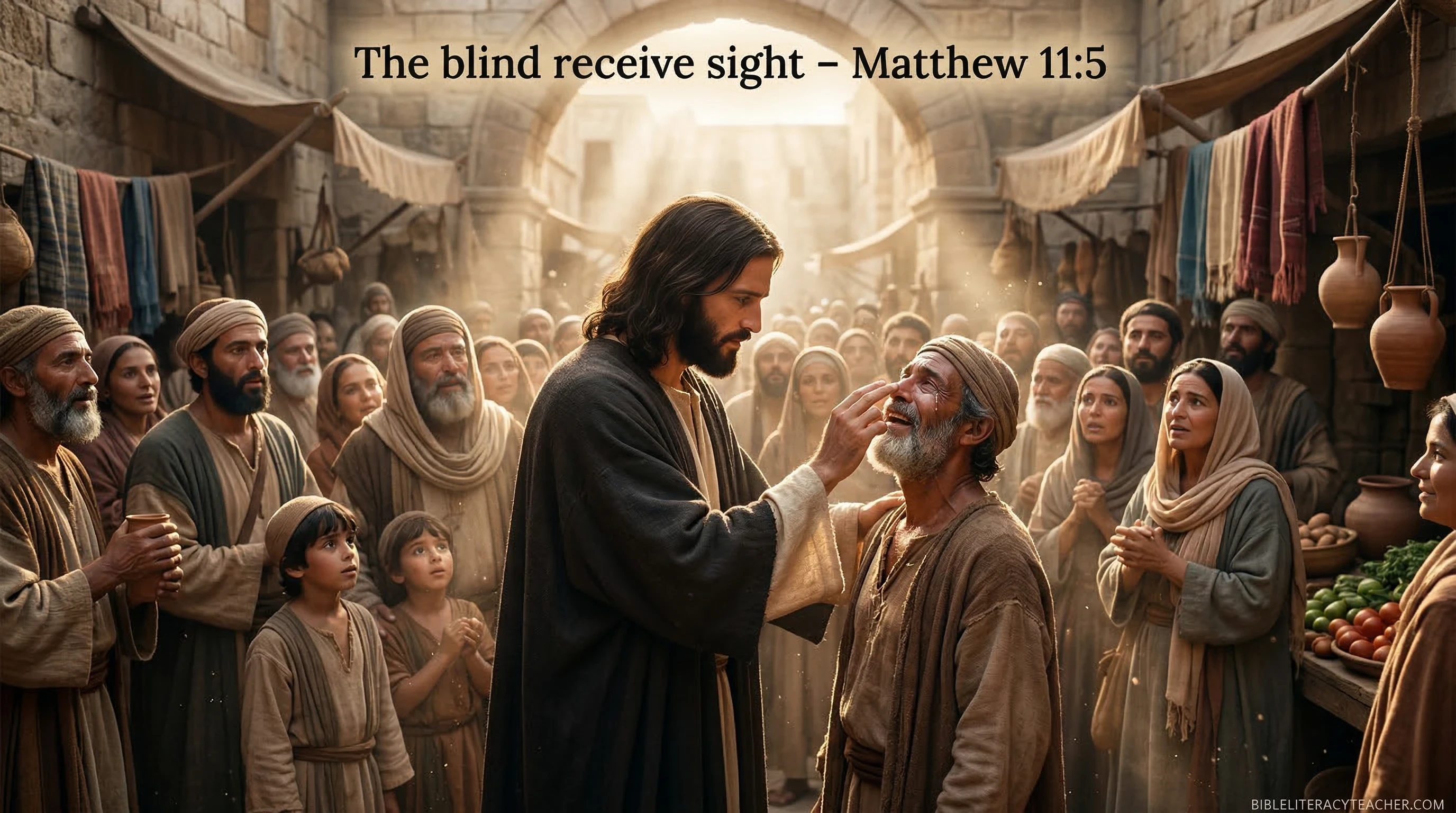
Jesus healing a blind man in Jerusalem marketplace
Calming storms
Jesus showed His authority over nature by calming the wind and the waves.
“Then he got up and rebuked the winds and the waves, and it was completely calm.” — Matthew 8:26
This miracle revealed that even the forces of nature obey Him.
Feeding thousands
Jesus multiplied a small amount of food to feed large crowds, showing His power to provide and His compassion for people’s needs.
“Jesus took the loaves, gave thanks, and distributed to those who were seated as much as they wanted.” — John 6:11
Examples include:
- Feeding the 5,000 (Matthew 14:13–21)
- Feeding the 4,000 (Matthew 15:32–39)
Raising the dead
Jesus demonstrated His authority over life and death by bringing people back to life.
“Jesus said to her, ‘I am the resurrection and the life. The one who believes in me will live, even though they die.’” — John 11:25
Examples include:
- Raising Jairus’ daughter (Mark 5:35–43)
- Raising the widow’s son at Nain (Luke 7:11–17)
- Raising Lazarus (John 11:38–44)
One famous miracle involved feeding more than 5,000 people with only five loaves of bread and two fish.
After this miracle people said:
“Surely this is the Prophet who is to come into the world.”
— John 6:14 (NIV)
Another dramatic moment occurred when Jesus calmed a storm.
“He got up, rebuked the wind and said to the waves, ‘Quiet! Be still!’ Then the wind died down and it was completely calm.”
— Mark 4:39 (NIV)
Even His disciples were amazed.
The miracles of Jesus were signs pointing to His divine identity.
“Jesus performed many other signs in the presence of his disciples… But these are written that you may believe that Jesus is the Messiah, the Son of God.” — John 20:30–31
8. The Twelve Disciples
Jesus chose twelve men to follow Him closely and learn from Him. These disciples later became leaders of the early church. They included:
- Peter
- Andrew
- James (son of Zebedee)
- John
- Philip
- Bartholomew
- Matthew
- Thomas
- James (son of Alphaeus)
- Thaddaeus (Judas son of James)
- Simon the Zealot
- Matthias (replacement for Judas Iscariot)
Jesus told them their mission would change the world.
“Come, follow me,” Jesus said, “and I will send you out to fish for people.”
— Matthew 4:19 (NIV)
After the resurrection they spread the message of Jesus throughout the Roman world.
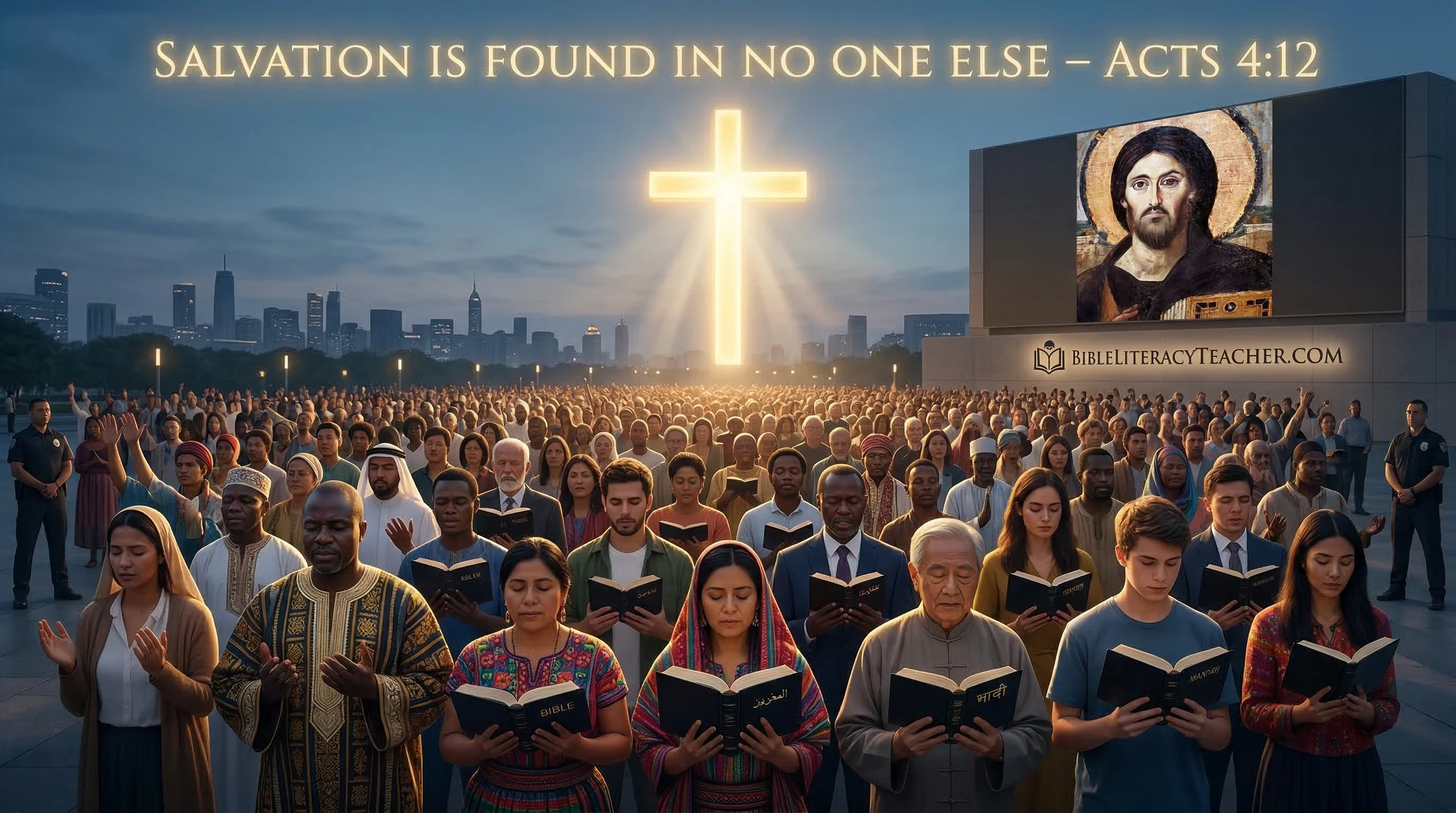 People from many nations worshiping Jesus together
9. Opposition to Jesus
Not everyone welcomed the teachings of Jesus. Some religious leaders believed He was challenging their authority. They accused Him of blasphemy and sought to stop His influence. Tension grew as Jesus continued teaching in Jerusalem and performing miracles. Eventually, religious leaders plotted to have Him arrested.
Religious Leaders Felt Their Authority Was Being Challenged.
Jesus’ teaching and growing popularity made the religious leaders question His authority.
Gospel of Matthew 21:23 (NIV)
“Jesus entered the temple courts, and, while he was teaching, the chief priests and the elders of the people came to him. ‘By what authority are you doing these things?’ they asked. ‘And who gave you this authority?’”
The leaders were uncomfortable with Jesus’ influence and questioned His authority.
They Accused Jesus of Blasphemy
When Jesus forgave sins and claimed authority from God, religious leaders accused Him of blasphemy.
Gospel of Mark 2:6–7 (NIV)
“Now some teachers of the law were sitting there, thinking to themselves, ‘Why does this fellow talk like that? He’s blaspheming! Who can forgive sins but God alone?’”
Another clear accusation occurred during Jesus’ trial.
Gospel of Matthew 26:65–66 (NIV)
“Then the high priest tore his clothes and said, ‘He has spoken blasphemy! Why do we need any more witnesses? Look, now you have heard the blasphemy. What do you think?’ ‘He is worthy of death,’ they answered.”
Tension Grew Because of Jesus’ Teachings and Miracles
Jesus’ miracles caused both amazement among the people and fear among the leaders.
Gospel of John 11:47–48 (NIV)
“Then the chief priests and the Pharisees called a meeting of the Sanhedrin. ‘What are we accomplishing?’ they asked. ‘Here is this man performing many signs. If we let him go on like this, everyone will believe in him…’”
This passage shows the leaders were worried about His growing influence.
Religious Leaders Plotted to Arrest and Kill Him
Eventually they decided to stop Jesus by arresting Him.
Gospel of Luke 19:47 (NIV)
“Every day he was teaching at the temple. But the chief priests, the teachers of the law and the leaders among the people were trying to kill him.”
Gospel of Matthew 26:3–4 (NIV)
“Then the chief priests and the elders of the people assembled in the palace of the high priest, whose name was Caiaphas, and they schemed to arrest Jesus secretly and kill him.”
10. The Crucifixion of Jesus Christ
Jesus was arrested in Jerusalem and brought before the Roman governor Pontius Pilate. Although Pilate did not find Him guilty of a crime, he allowed Jesus to be executed. Jesus was crucified outside Jerusalem on a hill called Golgotha. Crucifixion was a brutal Roman method of execution. But Christians believe His death had a divine purpose.
The prophet Isaiah wrote centuries earlier:
“But he was pierced for our transgressions, he was crushed for our iniquities;
the punishment that brought us peace was on him, and by his wounds we are healed.”
— Isaiah 53:5 (NIV)
Jesus Himself explained:
“For even the Son of Man did not come to be served, but to serve, and to give his life as a ransom for many.”
— Mark 10:45 (NIV)
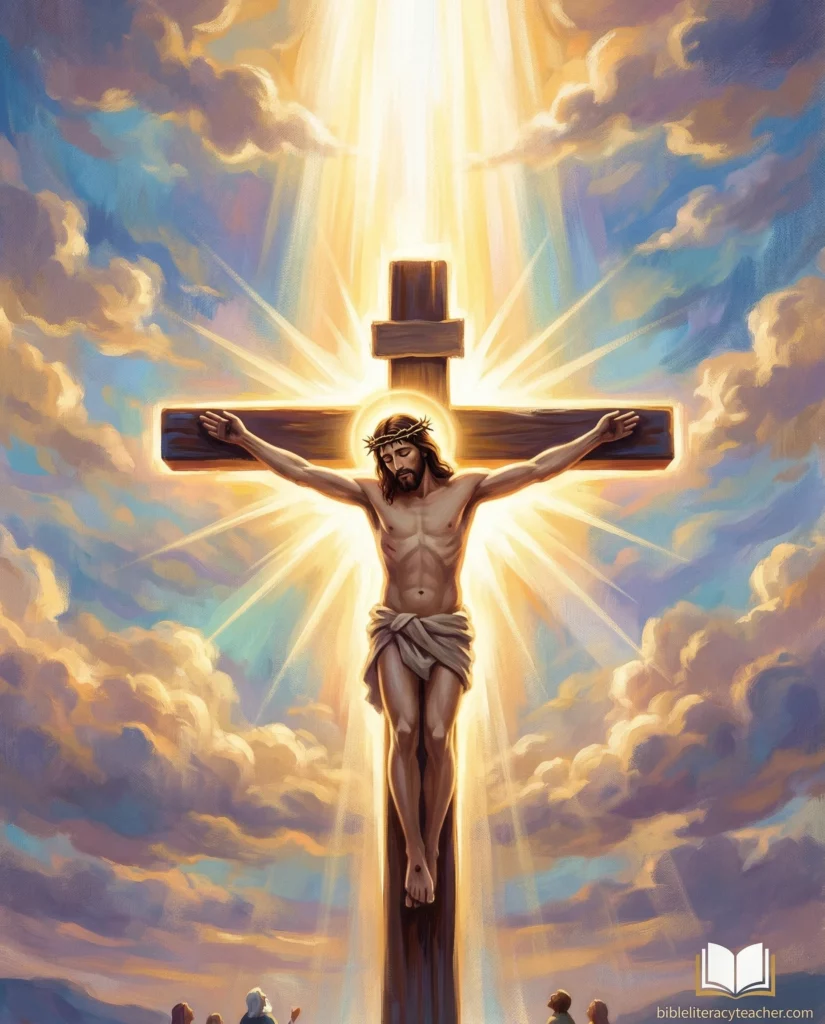
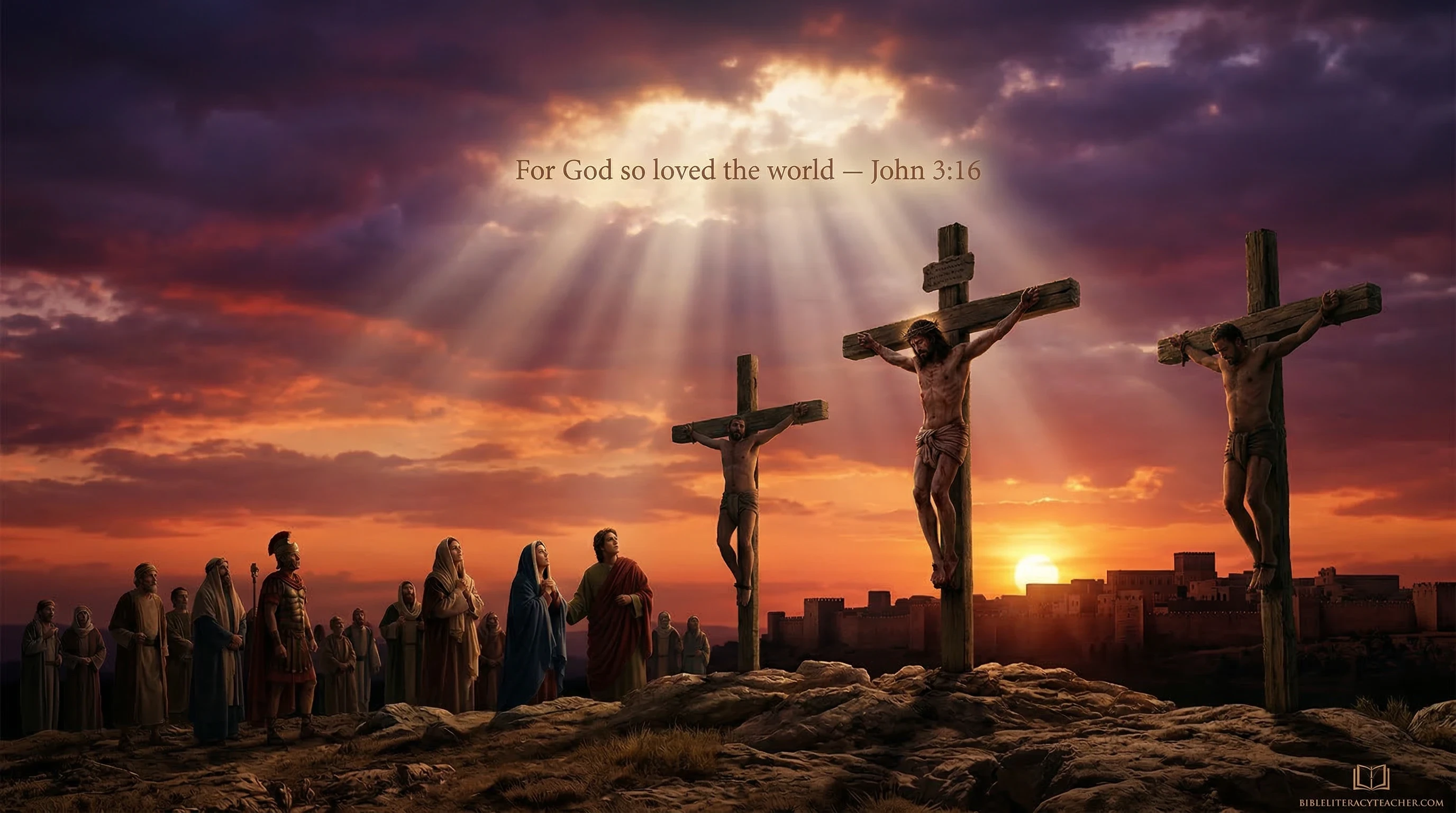 Crucifixion of Jesus on the hill of Golgotha
11. The Resurrection of Jesus Christ
Three days after His death, something extraordinary happened. Women visiting His tomb found it empty. An angel appeared and told them:
“He is not here; he has risen, just as he said.”
— Matthew 28:6 (NIV)
Jesus later appeared to many of His followers. The apostle Paul the Apostle wrote:
“Christ died for our sins according to the Scriptures, that he was buried, that he was raised on the third day according to the Scriptures.”
— 1 Corinthians 15:3–4 (NIV)
The resurrection became the foundation of the Christian faith.
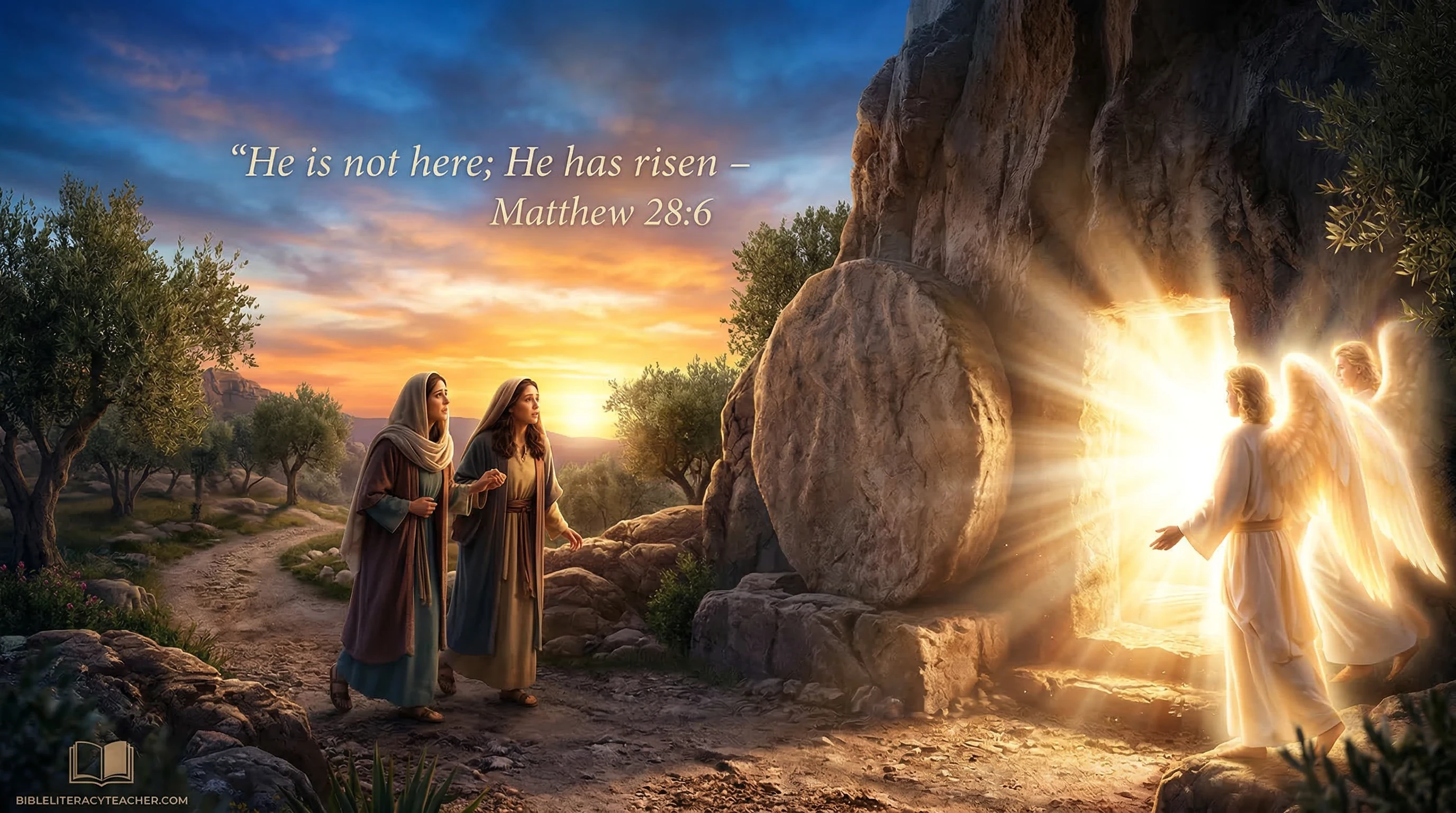 The empty tomb of Jesus at sunrise
12. The Spread of Christianity
After the resurrection, Jesus’ followers began sharing His message across the Roman Empire. The community of believers eventually became the Christian Church.
Today Christianity is the largest religion in the world. The message of Jesus has spread to nearly every nation.
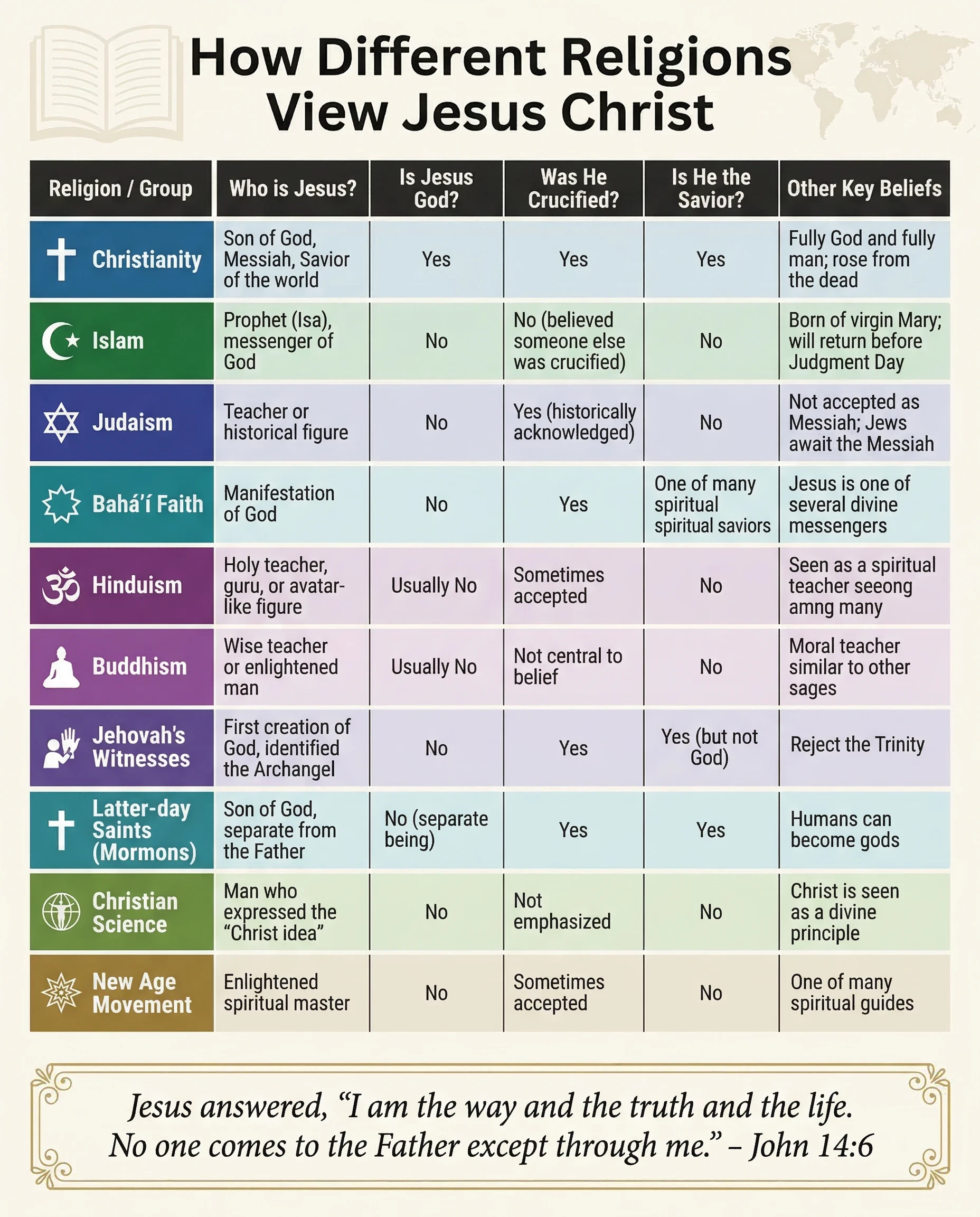
13. Who is Jesus Christ in Other Religions
Jesus is also respected in other religions.
For example:
- In Islam, Jesus (Isa) is considered a prophet and the Messiah.
- In the Baháʼí Faith, He is seen as a manifestation of God.
However, Christianity uniquely teaches that Jesus is the Son of God and Savior of the world.
14. Why Jesus Christ Matters Today
The teachings of Jesus continue to inspire people to:
- love others
- forgive enemies
- care for the poor
- seek justice
- live with faith
Christians believe Jesus offers forgiveness and eternal life. One of the most famous Bible verses explains this message:
“For God so loved the world that he gave his one and only Son, that whoever believes in him shall not perish but have eternal life.”
— John 3:16 (NIV)
The Most Important Question
Jesus once asked His disciples a question that still challenges people today.
“But what about you?” he asked. “Who do you say I am?”
— Matthew 16:15 (NIV)
For Christians, Jesus is:
- the promised Messiah
- the Son of God
- the Savior of the world
Exploring the life of Jesus is one of the most important journeys anyone can take.
The question remains for every person today.
WHO DO YOU BELIEVE JESUS IS?
Share your thoughts in the comment section below and I will be more than happy to get intouch with you.
Paul, M.
WhatsApp: +66982252990/+917085928263
Email: paulmondo@bibleliteracyteacher.com /info@bibleliteracyteacher.com
Website: www.bibleliteracyteacher.com
Social Media: Facebook | Twitter | Pinterest | LinkedIn | YouTube