
Most people who want to read the Bible every day have already started at least once. They chose a plan, read with energy for a few days, then missed one morning, and the plan sat unopened for weeks. If that describes you, the problem is probably the shape of the habit and not a lack of commitment. This article explains how to build a daily Bible study habit that survives a full week, and what to do when it doesn’t.

Why good Bible reading plans collapse in the second week
A typical reading plan assigns three or four chapters a day and assumes every day will look the same. The first week runs on enthusiasm. In the second week a late shift, a sick child, an exam or an early flight arrives, and the plan has no way to bend around it.
Once you fall a day or two behind, the plan starts to feel like a debt. You face a choice between reading six chapters to catch up or skipping ahead and feeling that you cheated. Many people choose neither and quietly stop. The plan fails because it was built for an ideal week that almost nobody has.
A lasting habit starts from the opposite assumption: your week will be messy. Build something small enough to fit on a bad day, and the good days will take care of themselves.
What Psalm 1 and Joshua 1:8 say about delighting in God’s Word
Psalm 1:2 describes the blessed person this way: “his delight is in the law of the LORD, and on his law he meditates day and night.” The word is delight, not duty. Verse 3 compares that person to a tree planted by streams of water, one that yields its fruit in its season. Fruit comes in its season, so the passage promises growth over time and says nothing about speed.
Joshua 1:8 gives similar instruction to a man about to lead Israel: “This Book of the Law shall not depart from your mouth, but you shall meditate on it day and night, so that you may be careful to do according to all that is written in it.” Notice the purpose clause. Meditation exists so that Joshua will be careful to do what it says. The “good success” at the end of the verse is tied to that faithful obedience, in the context of the task God gave Joshua. It is no formula for an easy life or a bigger income.
Jesus gives the clearest picture. When tempted in the wilderness he answered, “Man shall not live by bread alone, but by every word that comes from the mouth of God” (Matthew 4:4). Bread is eaten daily because you get hungry again. Nobody tries to eat a month of meals on the first of the month, and nobody feels guilty that yesterday’s lunch has worn off. Israel’s manna in Exodus 16 worked the same way: each household gathered the day’s portion, one day at a time.
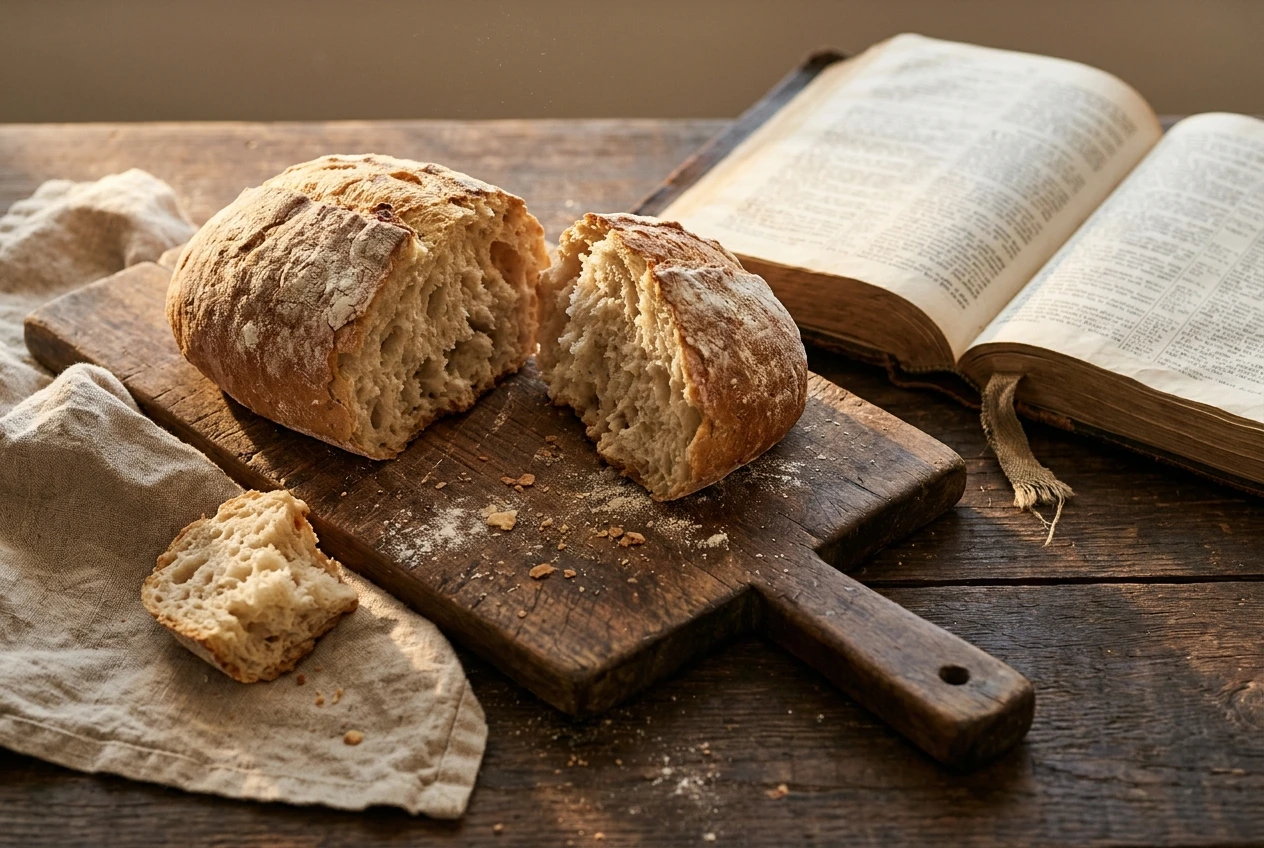
Seen this way, Bible reading is closer to a meal than a quota. The question to ask each day is whether you were fed, rather than how many chapters you completed.
Start smaller than feels spiritual: a ten minute pattern of read, ask, apply
A small habit can feel unserious, as though a faithful believer should be giving an hour. But a ten-minute habit you keep for a year does far more than an hour-long habit you keep for nine days. You can always read longer on a quiet Sunday afternoon. The daily minimum should be what you can do on your worst day.
Here is a pattern that fits into ten minutes.
- Read (about five minutes). Read one short passage slowly, ideally aloud or at least without skimming. Read the whole chapter if it is short, or one section of a longer one.
- Ask (about three minutes). Put a few questions to the text. What is happening here, and what came just before it? What does this passage show me about God? What does it show me about people? Is there a command to obey, a promise to trust, or a warning to heed?
- Apply (about two minutes). Write one sentence about what you will do or think differently today. Make it specific enough that you could tell by evening whether you did it. “Be more patient” is hard to check. “When my brother calls tonight, I will let him finish before I answer” is easy.
James 1:22 says, “Be doers of the word, and not hearers only, deceiving yourselves.” The apply step exists because of that verse. A reading without an application can leave you feeling informed while your Tuesday stays exactly the same.
Keep a small notebook or a notes file for the one-sentence applications. A week later, they will show you what you have been learning.
Choose the time and place before you choose the book
Most people spend their energy choosing the perfect reading plan and almost none choosing when and where they will read. This is backwards. A fixed time and place do more to keep a habit alive than any plan, because they remove the daily decision about whether to read.
Pick a moment that already happens every day and attach your reading to it. It might be the first coffee of the morning, the bus ride, the lunch break, or the ten minutes after the children are in bed. Choose the slot you are least likely to lose. If mornings are unpredictable in your household, an evening anchor will serve you better, however spiritual early rising sounds.

Then settle the place. Keep your Bible, a pen and your notebook where you will be at that time, so nothing needs to be found or set up. If you read on a phone, silence notifications for those ten minutes. Distraction is the quickest way to turn a reading into a scroll.
Deuteronomy 6:6-7 describes God’s words being talked about “when you sit in your house, and when you walk by the way, and when you lie down, and when you rise.” Scripture was meant to be woven into ordinary routines, which is exactly what an anchored habit does.
Where to begin: Mark, Psalms or Proverbs, and how much to read
Starting at Genesis 1 and aiming for Revelation 22 defeats many readers by the time they reach the detailed laws of Leviticus. There is no rule that says you must read straight through first. Three good places to start are these.
Mark. The shortest of the four Gospels has 16 chapters and moves quickly through the life of Jesus. It is a strong choice for new believers, and for anyone who has never read a Gospel carefully from start to finish. Read one chapter or one section a day.
Psalms. There are 150, and they put words to praise, fear, grief and trust. A psalm is often short enough to read on a day when you have little time, and they teach you how to talk to God honestly.
Proverbs. With 31 chapters, Proverbs fits a month. Read the chapter that matches the day of the month. It speaks directly about money, speech, work, friendship and temptation, which makes the apply step easy to write.
As for quantity, one chapter or one coherent passage is plenty. Stopping at a natural break keeps the passage in context, which matters, because a verse read alone can be bent to mean something its author never intended (Acts 17:11 commends the Bereans for examining the Scriptures daily to see whether what they heard was true). If a chapter is long, read a section and continue tomorrow. Finishing the page matters less than understanding it.
What to do on the day you miss: return with grace, not guilt
You will miss a day. Decide now what you will do when it happens, so that you are not making the decision while feeling discouraged.
Here is a simple recovery plan:
- Do not catch up. Resume with the next passage, not the one you skipped. Skipped bread does not need to be eaten later; you simply eat today’s.
- Keep a two-minute minimum. On a collapsing day, read a single psalm or a few verses and write one line. This keeps the habit alive on days when ten minutes is impossible.
- Ask what broke. If you keep missing the same slot, the time was wrong. Move it, and treat that as an adjustment of the plan, not a failure of discipline.
Behind this plan is a theological point. Guilt-driven reading turns the Bible into a task you must complete to stay in God’s good graces. But Romans 8:1 says there is “no condemnation for those who are in Christ Jesus,” and Lamentations 3:22-23 says his mercies “are new every morning.” Proverbs 24:16 says the righteous person falls seven times and rises again. Getting up again is part of what the habit is for. A missed morning is an ordinary event, and tomorrow’s reading begins with mercy.
Keeping it alive in a full life: church, family and a friend who asks
A habit held by willpower alone is fragile. Put people around it.
Church. Many churches publish the passage for Sunday’s sermon in advance. Reading it during the week means you arrive already knowing the text, and the sermon becomes a conversation instead of a first hearing.
Family. If you live with others, a shared reading can be very short: a psalm at the dinner table or a few verses before bed. Parents who read together with their children are doing what Deuteronomy 6 describes.

A friend who asks. Choose one person and agree on a weekly question, such as “What did you read, and what stood out?” Proverbs 27:17 says, “Iron sharpens iron, and one man sharpens another.” This is accountability that works through curiosity and does not need to become a performance review. You will also remember more of what you read when you know you will have to explain it.
Tools can help too. If you want to see how apps and digital resources can support the habit, the article on using technology in Bible study covers that side. The habit itself comes first, and tools are optional.
How to tell the habit is changing you and not just filling a checklist
A streak of unbroken days can make you feel successful while little changes. Jesus once told religious leaders, “You search the Scriptures because you think that in them you have eternal life; and it is they that bear witness about me, yet you refuse to come to me” (John 5:39-40). It is possible to read carefully and still miss the One the pages point to.
So check for fruit rather than days counted. Every few weeks, look back through your notebook and ask yourself questions like these:
- Do I recall passages when I am making a decision, or facing a temptation, or deciding how to answer someone?
- Am I quicker to forgive, slower to anger, more honest with money and with words?
- Is my prayer life becoming more honest as I read?
- Can I name specific things I have obeyed because of what I read, and not only things I have learned?
- Am I reading to meet Christ, or only to finish?
The fruit of the Spirit in Galatians 5:22-23 is love, joy, peace, patience, kindness, goodness, faithfulness, gentleness and self-control. Change in these is usually slow, and others often notice it before you do. If your notebook shows even a few small obediences over a month, the habit is doing what Scripture intends.
Your next ten minutes
You do not need a perfect plan to begin. Choose the ten minutes, choose the place, and open to your first chapter today, whether that is Mark 1, a psalm, or the Proverbs chapter that matches today’s date. Then join the email newsletter to receive a short Bible-based wisdom theme that gives you something to study each day.