
Most people who attend church have heard the phrase “born again” many times. Fewer can explain it from the Bible. So what does it mean to be born again? The clearest answer comes from the one conversation where Jesus used the phrase, a late meeting with a religious leader recorded in John 3:1-21.
This article stays with that single conversation and follows it verse by verse. The aim is to see what Jesus said new birth is, and then to ask what should be different in a person’s life if it has happened. Quotations are from the ESV.
Why a Respected Religious Leader Came to Jesus at Night
John introduces Nicodemus with three facts (John 3:1). He was a Pharisee, he was a ruler of the Jews, and he came to Jesus by night. Pharisees were known for careful obedience to the law. Nicodemus was among the most religious people in the country.
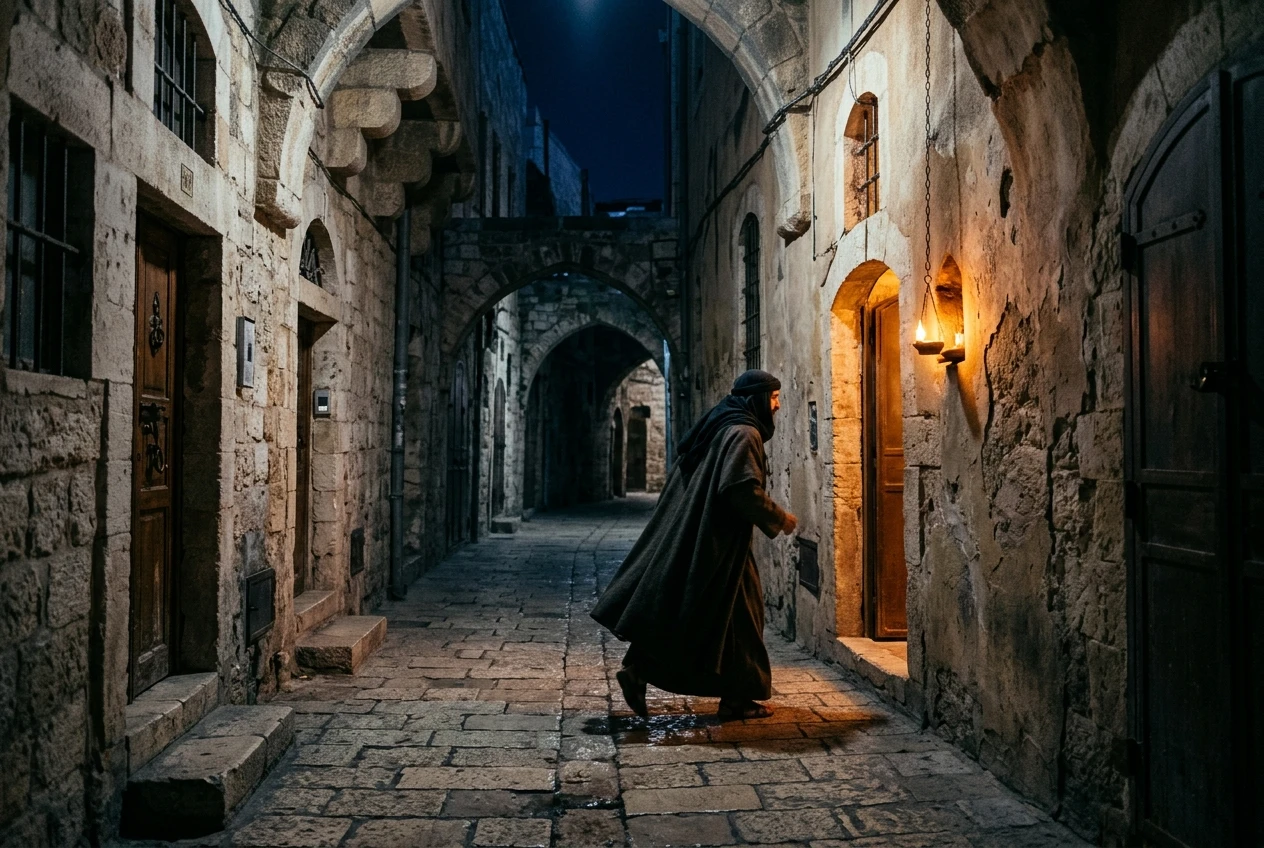
John does not say why he came at night. It may have been for privacy, or to avoid being seen with a teacher many of his colleagues distrusted. Whatever the reason, he began politely: “Rabbi, we know that you are a teacher come from God, for no one can do these signs that you do unless God is with him” (v. 2).
Jesus did not return the compliment or answer an unasked question. He said: “Truly, truly, I say to you, unless one is born again he cannot see the kingdom of God” (v. 3). The Greek word translated “again” can also mean “from above,” and John often plays on that double sense. Both meanings are true here. This birth is a second one, and it comes from heaven.
Nicodemus had a respected position, a thorough knowledge of Scripture, and a reputation for religious discipline. Jesus told him that none of it qualified him to see God’s kingdom. A man could have all that and still need to be born again.
John mentions Nicodemus twice more. He asks a fair question in John 7:50-51 when the other leaders want Jesus condemned, and he helps bury Jesus’ body in John 19:39. The conversation did not end that night.
Born of Water and the Spirit: What John 3:5 Means
Nicodemus took Jesus literally: “Can he enter a second time into his mother’s womb and be born?” (v. 4). Jesus answered, “Truly, truly, I say to you, unless one is born of water and the Spirit, he cannot enter the kingdom of God” (v. 5). Then he added, “That which is born of the flesh is flesh, and that which is born of the Spirit is spirit” (v. 6).
Christians read “water” in three main ways, and it is fair to say so:
- Physical birth. Water refers to the birth every person has already had, and Spirit refers to the second, spiritual birth. Verse 6 contrasts flesh and spirit in the same way.
- Baptism. Many traditions, including Catholic, Orthodox and Lutheran, understand water as baptism, which they hold is connected to new birth. Many Baptist, Pentecostal and other churches see baptism as the public sign of a new birth that has already happened.
- Cleansing by the Spirit. Water points back to Ezekiel 36:25-27, where God promises to sprinkle clean water on his people, give them a new heart, and put his Spirit within them.
The third reading fits Jesus’ next words to Nicodemus: “Are you the teacher of Israel and yet you do not understand these things?” (v. 10). Ezekiel 36 was in the Scriptures Nicodemus taught, so he had grounds to recognise what Jesus meant.
Christians who disagree about the water agree about the Spirit. Nobody enters God’s kingdom without the Spirit’s work. The same discussion can also give your church’s view on baptism a fair hearing without making it a test of whether someone is saved.
Why New Birth Is God’s Work and Not Ours
Think about your own birth. You did not plan it, choose it, or take part in it. Jesus uses this comparison on purpose. A person is born; a person does not give birth to themselves.
John 1:12-13 says the same thing at the start of the Gospel. Those who received Jesus “were born, not of blood nor of the will of the flesh nor of the will of man, but of God.” Three things are ruled out in that verse: family line, personal willpower, and another person’s decision. Only God remains.
In verse 8 Jesus compares the Spirit to wind: “The wind blows where it wishes, and you hear its sound, but you do not know where it comes from or where it goes. So it is with everyone who is born of the Spirit.” You cannot see or control wind, but you can see what it does to trees and water. The Spirit’s work cannot be seen directly either, but it shows in a changed life.
Titus 3:5 states the same truth: “He saved us, not because of works done by us in righteousness, but according to his own mercy, by the washing of regeneration and renewal of the Holy Spirit.” Regeneration is the theological word for new birth. Notice that it rests on God’s mercy and not on anything we have done.
This does not remove human response. Jesus says in verse 16 that “whoever believes in him should not perish but have eternal life,” and in 3:14-15 he compares himself to the bronze serpent Moses lifted up in the wilderness (Numbers 21:4-9). Israelites who looked at it lived. Believing is the looking. But believing is also a sign that God has been at work, because John 1:13 says new birth comes from God and not from our own will.
Born Again or Just Religious? Five Substitutes People Trust
Nicodemus relied on things that most people in his culture would have counted as proof of God’s favour. Churchgoers today have their own versions. Each of the following can be good in itself, and none of them is new birth.
- Church attendance or membership. Being on a church roll is not the same as being in God’s family. Nicodemus attended the temple his whole life.
- Family background. Growing up with Christian parents is a real advantage. John 1:13 still says new birth is “not of blood.”
- Moral effort. Being honest, generous and decent matters. Titus 3:5 says God did not save us “because of works done by us in righteousness.”
- Bible knowledge and religious activity. Nicodemus was a teacher of Israel and still did not understand. Serving, leading, and quoting verses can all continue with an unchanged heart.
- A past moment with no present fruit. A raised hand, a prayer, or an emotional evening may have been the start of real faith. If nothing has changed since, it is worth asking whether God did anything in it.
Reading this list may be uncomfortable. The purpose is the same as Jesus’ purpose with Nicodemus, which was to point him to what he actually needed.
What Changes After New Birth
Jesus tells Nicodemus that “that which is born of the Spirit is spirit” (v. 6). A new kind of life begins. Scripture describes at least three results.
A new heart. God promised through Ezekiel, “I will give you a new heart, and a new spirit I will put within you… and cause you to walk in my statutes” (Ezekiel 36:26-27). Obedience grows out of a changed heart. Paul says the same: “If anyone is in Christ, he is a new creation” (2 Corinthians 5:17).
New desires. A person who has been born again starts to want things they did not want before: to know God, to pray, to read the Bible, to be with other believers, to be rid of sin. The desires are often weak at first. They are still present.
Fruit that 1 John describes. John wrote that letter so that readers could know they have eternal life (1 John 5:13). He gives several marks:
- Believing that Jesus is the Christ (5:1).
- Practising righteousness (2:29).
- Loving fellow believers (3:14; 4:7).
- Keeping God’s commandments, which “are not burdensome” (5:2-3).
- Overcoming the world’s pull (5:4).
- Refusing to make sin a settled way of life (3:9).
Compare this with the substitutes above. The substitutes can be seen and measured by other people. The marks John lists are about the direction of your heart and the pattern of your daily life, such as how you treat a difficult relative, what you do with money, and what you watch when nobody is looking. If you are interested in the Spirit’s fruit in more detail, Galatians 5:22-23 lists it.
Born Again Does Not Mean Perfect
The same letter that lists these marks also says, “If we say we have no sin, we deceive ourselves, and the truth is not in us” (1 John 1:8). It continues: “If we confess our sins, he is faithful and just to forgive us our sins and to cleanse us from all unrighteousness” (1:9).
John 3:9 shows that new birth does not give instant understanding. Nicodemus asked, “How can these things be?” Confusion is not a sign that nothing happened.
Newborn babies are weak and need feeding. Peter uses that image: “Like newborn infants, long for the pure spiritual milk, that by it you may grow up into salvation” (1 Peter 2:2). Slow growth is expected. What matters is the direction over months and years.
When you doubt, ask these questions:
- Do I still believe Jesus is who he says he is?
- Does sin trouble me, or do I feel nothing?
- Do I want to be forgiven and changed, even when I fail?
- Am I more patient or more honest than I was a year ago, even slightly?
Romans 8:16 says the Spirit “bears witness with our spirit that we are children of God.” Philippians 1:6 says God “who began a good work in you will bring it to completion at the day of Jesus Christ.” Those verses describe God’s faithfulness. They do not depend on how strongly you feel on a given day.
If You Are Not Sure You Are Born Again
The Bible’s answer is direct. Jesus says in John 3:16 that whoever believes in him has eternal life, and in 6:37 that he will never cast out anyone who comes to him. Luke 11:13 says the Father will give the Holy Spirit to those who ask. Romans 10:9-13 says that anyone who calls on the Lord will be saved.
If you realise you have relied on one of the five substitutes, there is no need to panic. You can ask God honestly to give you the new birth you have been missing, trust Jesus as your Saviour and not your church record, and repent of anything you have been holding on to. That prayer is an honest start, and God hears honest prayers.
Here are some practical steps for next week:
- Read John 3 once a day for seven days. Notice something new each time, and write one question you want answered.
- Pray plainly. Tell God where you are, what you doubt, and what you want.
- Read 1 John, a chapter a day over five days. Mark where you see the marks of new birth in your own life, and where you do not.
- Talk to a pastor or a mature believer. Tell them what you have been thinking. Most will be glad to be asked.
- Stay connected to a local church, as an expression of faith and not a replacement for it.
A short daily rhythm helps all of this. The guide on how to build a daily Bible study habit shows how to keep one going when your week is full. If you want to see how new birth fits into the larger story of salvation, Understanding Redemption From Genesis to Revelation traces it through the whole Bible.
Jesus ended his conversation with Nicodemus by saying that “whoever does what is true comes to the light” (John 3:21). Coming to the light is a good way to describe what to do next.
Read John 3 This Week
Open your own Bible and read John 3 slowly this week, all twenty-one verses at least once, before you read anything else about it. Then continue with Who Is Jesus? The Complete Guide to see more of the person who said “you must be born again,” and read the Bible study habit guide to make the reading regular. You can also join the email newsletter to receive the next lesson on Christian foundations.