Hebrews 11:1 gives the Bible’s own definition: “Now faith is the assurance of things hoped for, the conviction of things not seen.” Biblical faith is confidence in what God has promised before we see it fulfilled. It rests on who God is and what He has said, which separates it from positive thinking, where we trust a good attitude, and from presumption, where we expect God to act on our terms. Jesus answered that temptation with, “You shall not put the Lord your God to the test” (Luke 4:12).
Faith also involves more than agreeing that God exists. Even the demons believe that, and they shudder (James 2:19). Real faith listens to God, obeys Him and keeps going when the road is hard.
This study looks at six Bible stories about faith: the believers of Hebrews 11, Abraham, Moses, David, the woman who touched Jesus’ garment, and James’ teaching on faith and works.
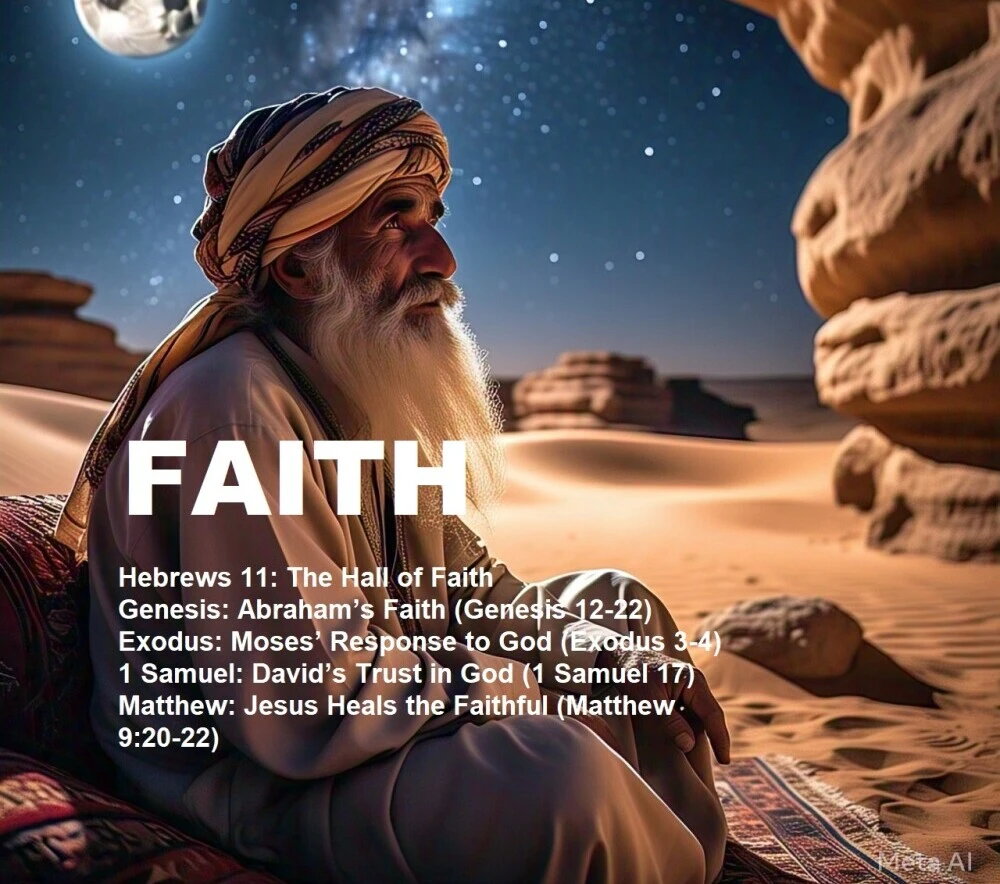
Hebrews 11: Ordinary People Who Trusted God
Hebrews 11 is often called the “Hall of Faith.” It was written to Christians under pressure who were tempted to turn back, and it reminds them of believers who trusted God before them. Abel offered an acceptable sacrifice (verse 4), Enoch walked with God (verses 5-6), Noah built an ark while no flood was in sight (verse 7), and Moses chose to suffer with God’s people rather than enjoy the pleasures of Egypt (verses 24-26).
The people on this list were flawed. Abraham twice lied about Sarah being his wife (Genesis 12 and 20), Sarah laughed at God’s promise (Genesis 18:12), and Rahab had lived as a prostitute. They appear in the chapter because at key moments they trusted God and acted on His word. God does not wait for us to become flawless before He works through our faith.
The chapter is also honest about suffering. Some believers “were tortured” or “suffered mocking and flogging,” and “these all died in faith, not having received the things promised” (Hebrews 11:13, 35-38). Faith does not guarantee an easy life. It trusts God’s promises even when we will not see their full fulfilment in this lifetime.
Abraham: Trusting God When the Future Is Uncertain
Paul calls Abraham the father of all who believe (Romans 4:11). God called him at 75 with the words, “Go from your country and your kindred and your father’s house to the land that I will show you” (Genesis 12:1). He received a promise and a command, but no map and no timeline, and “Abram went, as the LORD had told him” (Genesis 12:4).
Years later, with no child yet born, God told him to count the stars and promised descendants as numerous. “And he believed the LORD, and he counted it to him as righteousness” (Genesis 15:6). His faith had failures. He and Sarah tried to fulfil the promise through Hagar, and it brought pain to everyone involved (Genesis 16). Yet God kept His word, and Isaac was born when Abraham was 100 (Genesis 21:5).
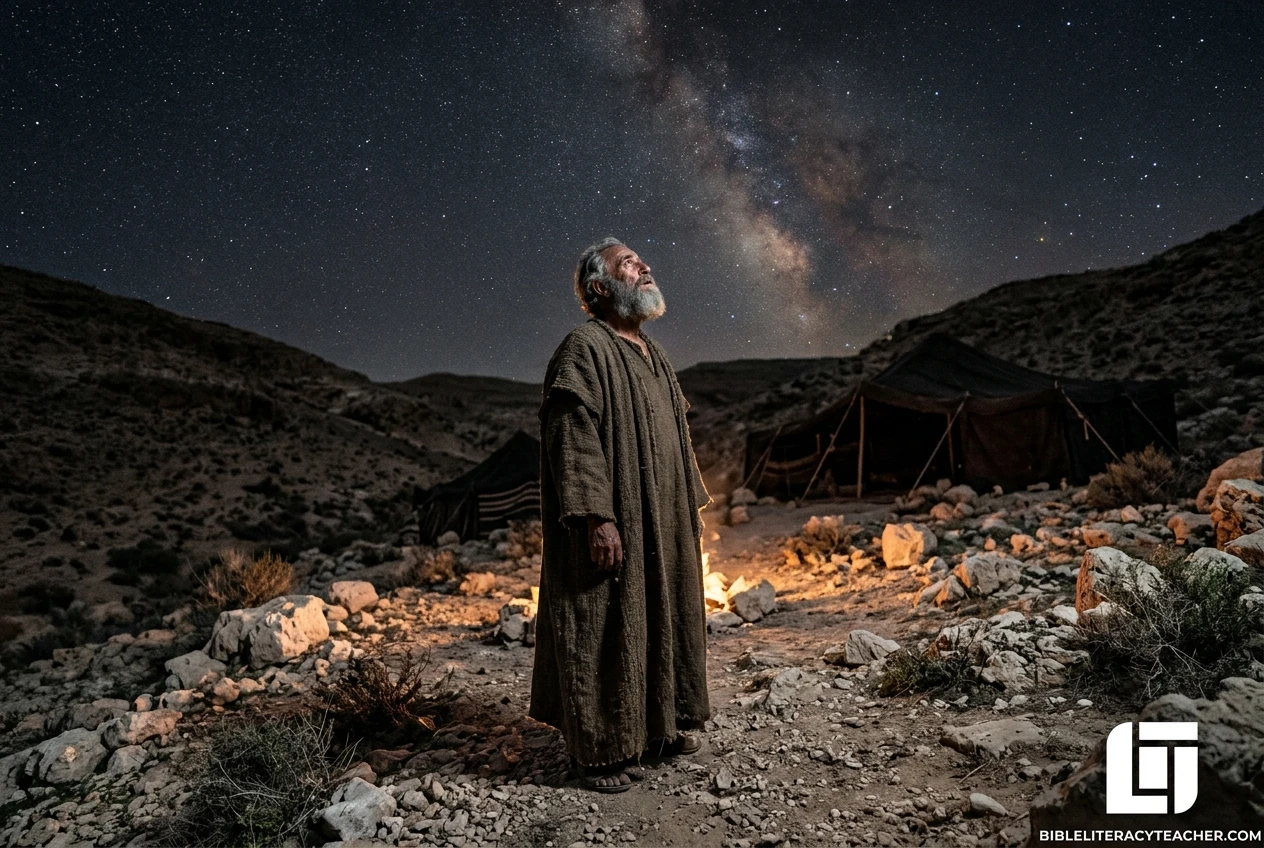
Then God tested Abraham by telling him to offer Isaac (Genesis 22). When Isaac asked where the lamb was, Abraham answered, “God will provide for himself the lamb” (Genesis 22:8). The angel of the LORD stopped him, and God provided a ram. Hebrews 11:19 says Abraham reasoned that God could even raise Isaac from the dead. For Christians, the account points forward to the cross, where God provided His own Son (John 1:29; Romans 8:32).
If you face a new job, a move or a long wait for an answered prayer, Abraham’s example is to follow God’s direction one step at a time and surrender your plans to His will.
Moses: Responding to God’s Call Despite Fear
At the burning bush, God told Moses He had seen His people’s suffering in Egypt and was sending him to bring them out (Exodus 3:7-10). Moses answered with objections: “Who am I that I should go to Pharaoh?” (Exodus 3:11). Then he asked what if the people would not believe him, said “I am slow of speech and of tongue” (Exodus 4:10), and finally asked, “Oh, my Lord, please send someone else” (Exodus 4:13).
Many believers feel the same, too young, too old, too broken or not confident enough for what God asks. God’s answer to the first objection is the centre of the story: “But I will be with you” (Exodus 3:12). He did not argue that Moses was impressive. He pointed to His own presence, revealed His name, gave Moses signs, reminded him, “Who has made man’s mouth?” (Exodus 4:11), and provided Aaron to help (Exodus 4:14-16).
God told Paul later, “My power is made perfect in weakness” (2 Corinthians 12:9). Faith does not wait until fear disappears. It obeys while trusting God’s presence, whether that means leading a Bible study, sharing your testimony or teaching your children about God.
David: Facing Giants With Confidence in God
In 1 Samuel 17, Goliath stood about six cubits and a span tall and challenged Israel for forty days. Saul and his soldiers were “dismayed and greatly afraid” (verse 11). David, a young shepherd who had come only to bring food to his brothers, heard Goliath defy “the armies of the living God” and saw the situation differently from everyone else (verse 26).
His courage was built on memory. He told Saul that God had delivered him from a lion and a bear while he guarded his father’s sheep, and that “the LORD who delivered me… will deliver me from the hand of this Philistine” (verse 37). He had seen God’s faithfulness in small, private battles before the public one.
David refused Saul’s armour and went out with a sling and five smooth stones. He told Goliath, “I come to you in the name of the LORD of hosts” (verse 45). He wanted everyone to know “that there is a God in Israel” (verse 46). His confidence was in God’s power, and his own skill was secondary.
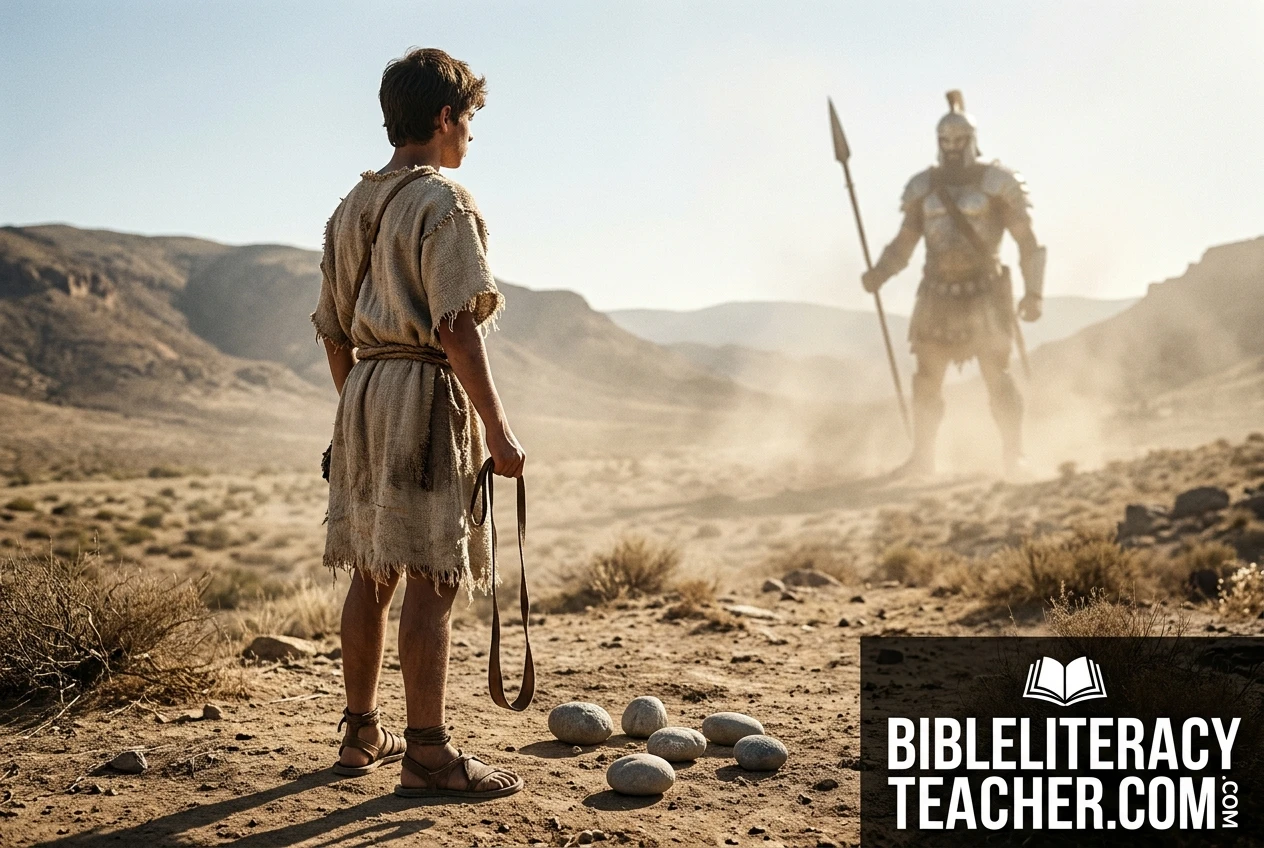
Our giants may be fear of the future, rejection, financial pressure, illness or discouragement. David shows three responses: remember what God has already done, refuse to measure the problem by human strength, and trust God with the outcome. Faith does not promise that every giant falls the way we want or on our schedule. It changes whether we look at the size of the problem or the greatness of God.
The Woman Who Touched Jesus’ Garment
Matthew records a woman who “suffered from a discharge of blood for twelve years” (Matthew 9:20). Mark adds that she had spent everything on physicians and only grew worse (Mark 5:26). Under the law, her condition made her ceremonially unclean (Leviticus 15:25-27), which likely meant years of isolation, exclusion from worship and shame.
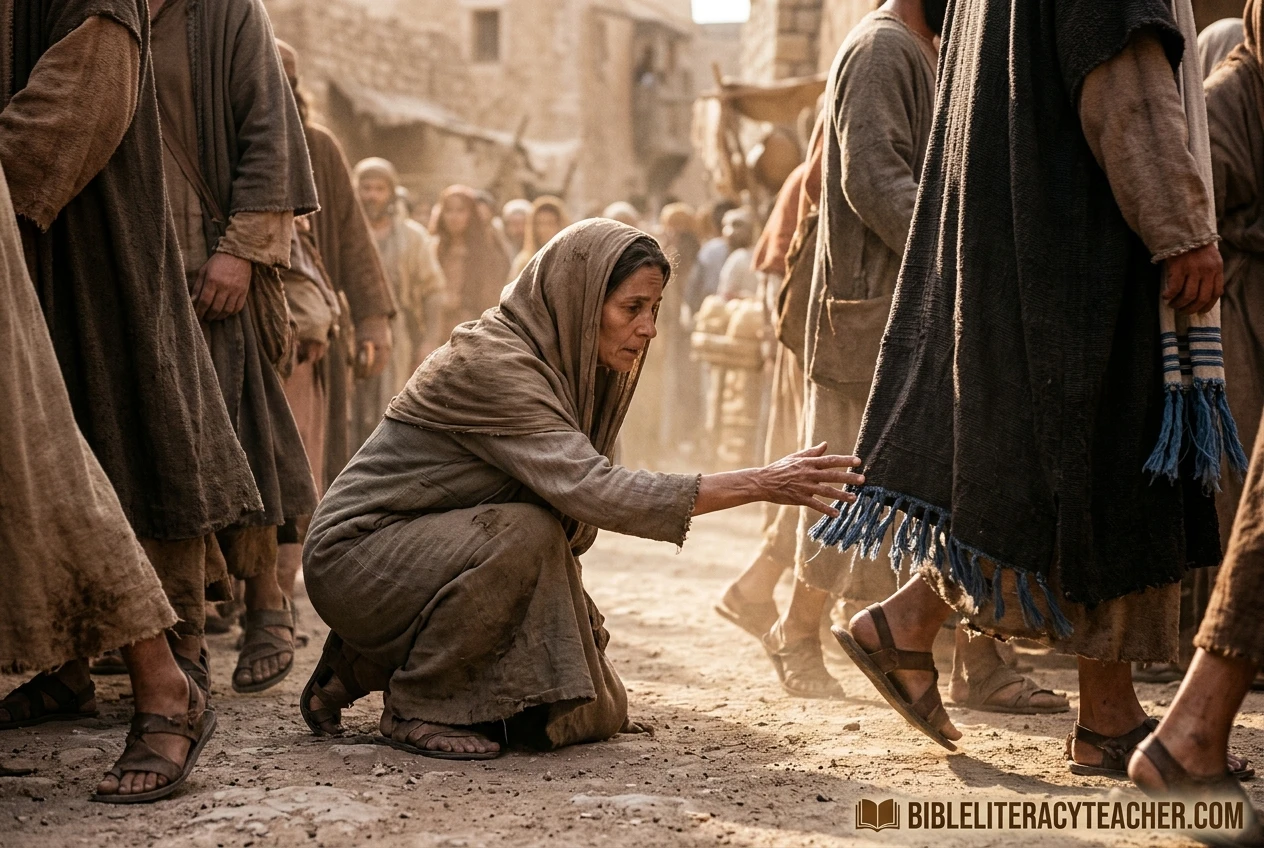
She said to herself, “If I only touch his garment, I will be made well” (Matthew 9:21). She came up behind Jesus in the crowd and touched the fringe of His cloak. Jesus turned and said, “Take heart, daughter; your faith has made you well” (Matthew 9:22). Mark and Luke record that He called her forward (Mark 5:30-34; Luke 8:45-48), so she was restored in body and welcomed publicly as a “daughter.” Her healing came from Jesus, and her faith mattered because of who she reached for.
This account shows Christ’s compassion and authority over sickness. It does not promise that every believer with enough faith will be healed at once. Paul left Trophimus sick at Miletus (2 Timothy 4:20), and he prayed three times for his own “thorn” to be removed and heard, “My grace is sufficient for you” (2 Corinthians 12:7-9). What the story does promise is that Jesus welcomes those who come to Him, however discouraged or helpless they feel (John 6:37).
James: Faith That Shows in Practical Action
James asks what real faith looks like on an ordinary day: “What good is it, my brothers, if someone says he has faith but does not have works? Can that faith save him?” (James 2:14). If a brother or sister lacks clothing and food and we only say, “Go in peace, be warmed and filled,” we have helped nobody (James 2:15-16). “So also faith by itself, if it does not have works, is dead” (James 2:17). He points to Abraham and Rahab as people whose actions proved their faith (James 2:21-25).
James does not contradict Paul. Salvation is “by grace… through faith,” “not a result of works,” and the next verse says we are “created in Christ Jesus for good works” (Ephesians 2:8-10). Paul explains how we are made right with God, and James explains what that faith produces. Good works are the fruit of salvation and cannot pay for it.
In daily life, living faith looks like helping a struggling neighbour or classmate, forgiving someone as Christ forgave you (Colossians 3:13), telling the truth kindly, giving generously, and serving at church without seeking recognition.
Practical Ways to Strengthen Your Faith
“Faith comes from hearing, and hearing through the word of Christ” (Romans 10:17). Faith grows as we spend time with God and put His Word into practice.

- Pray daily. Start with ten minutes of honest talk with God about your fears, needs and gratitude (Philippians 4:6-7).
- Read one passage slowly. Choose Genesis 22 or 1 Samuel 17 this week. If you need a routine, build a Bible study habit that survives a busy week.
- Memorise Hebrews 11:1. Write it on a card where you will see it each day.
- Keep a prayer journal. Record how God answers, including when the answer is “wait” or “no,” so that like David you can look back at the lions and bears He has already helped you through.
- Meet with other believers. Hebrews 10:24-25 calls us to encourage one another to love and good works.
- Serve one person this week in a specific, practical way.
Walk by Faith
Biblical faith is a lifelong practice of trusting, obeying and following God. These stories show that God works through imperfect people, that His presence outweighs our weakness, that His past faithfulness gives courage for the present, and that Jesus welcomes all who come to Him. Where is God asking you to trust Him more, or to obey, be courageous or serve someone? The God who was faithful to them is faithful to you.
Heavenly Father, thank You for being faithful in every season. Forgive me for trusting my own strength more than You. Help me believe Your promises, obey Your Word and face my fears with courage. Lord Jesus, I come to You with my needs, trusting Your compassion. Let my faith show in how I love and serve others, so that my life brings glory to You. In Jesus’ name, Amen.
Which of these six accounts has encouraged or challenged you most? Share your thoughts or prayer requests in the comments, and share this study with a friend who needs encouragement. You can find more Bible teaching at BibleLiteracyTeacher.com.