Most of us can say what a Christian is supposed to do. We attend church, avoid the obvious sins, give when asked and say grace before meals. Yet the attitudes underneath can stay the same: who we want to impress, what we are afraid of losing, and what we feel we are owed. If that sounds familiar, the question of how to develop godly character needs a better answer than “try harder.”
The Bible gives a different answer. Character grows from the inside, through the Holy Spirit and through a mind that God is renewing. That work is slow, and it is worth understanding before you try to speed it up.
Why Rule-Keeping Can Look Like Character and Still Leave You Unchanged
Jesus spoke bluntly to people who were careful about the outside of their lives. He told the Pharisees they cleaned the outside of the cup while the inside stayed full of greed and self-indulgence (Matthew 23:25-26). He did not tell them to keep more rules. He told them to clean the inside first, “and then the outside also will be clean.”

Paul described his own record in similar terms. By the standard of the law he was “faultless” (Philippians 3:6), yet he counted all of it as loss compared with knowing Christ. A flawless record and a changed heart are different things.
This matters because rule-keeping can produce a respectable person who is still driven by pride. You can avoid gossip and enjoy being seen as someone who avoids gossip. You can serve at church and keep a quiet record of who noticed. The behaviour passes inspection while the motive stays the same.
Rules do have a place. God’s commands show us what is good. But a rule can restrain behaviour without changing desire, and Scripture says God wants both changed.
What the World Calls Normal: Self-Promotion, Self-Protection and Self-Fulfilment
Every culture trains its people in certain habits of thought. Ours trains three in particular.
Self-promotion treats your life as a brand. You present the best version, collect approval and measure yourself by attention. Social media makes this constant, and the pull toward comparison is strong. If that is a struggle for you, Why Their Highlight Reel Makes You Feel Poor looks at what Paul learned about contentment.
Self-protection teaches you to guard your image, your time and your comfort. Saying sorry feels like losing, and generosity feels like risk.
Self-fulfilment says your main task is to become whoever feels most authentic to you, and that other people’s needs come second to that.
Each of these is easy to absorb without noticing, because everyone around you does it. That is why Paul wrote, “Do not conform to the pattern of this world, but be transformed by the renewing of your mind” (Romans 12:2). The word is conform: the pressure is steady, and it shapes you whether or not you agree to it.
Notice also that these habits can sit comfortably alongside church life. A person can sing worship songs on Sunday and spend Monday promoting, protecting and fulfilling themselves. Being honest about that is where change starts.
Character Is Fruit, Not Effort: What Galatians 5 Says the Spirit Produces
In Galatians 5:22-23, Paul lists what the Spirit produces: love, joy, peace, forbearance (patience), kindness, goodness, faithfulness, gentleness and self-control. He calls it fruit, singular, and the word matters. Fruit is not manufactured by the branch straining. It grows because the branch is joined to a living vine. Jesus said the same: “Remain in me, as I also remain in you… apart from me you can do nothing” (John 15:4-5).

Paul sets this beside “the acts of the flesh,” which include “selfish ambition” (Galatians 5:19-21). Selfish ambition appears in that list next to idolatry and fits of rage. Self-promotion is not a harmless personality trait. Scripture puts it in the same family as the works we usually take more seriously.
Does this mean we do nothing? No. Paul says, “Walk by the Spirit” (Galatians 5:16) and “keep in step with the Spirit” (5:25). Walking is something you do. But you walk in dependence, asking for help, yielding to the Spirit’s prompting and turning away from what you know grieves him. Effort has a role, but it works as cooperation with God and does not replace him.
This is also why character cannot be copied from a list. Patience produced by gritted teeth tends to break down under enough pressure. Patience that grows from knowing how patient God has been with you holds up better.
If you are unsure whether you have a starting point with God at all, begin with what Jesus told Nicodemus about being born again. The fruit grows from that new life.
Put Off, Be Renewed, Put On: The Pattern in Ephesians 4 and Romans 12
Ephesians 4:22-24 gives a three-part pattern. You are “to put off your old self, which is being corrupted by its deceitful desires; to be made new in the attitude of your minds; and to put on the new self, created to be like God in true righteousness and holiness.”
The order is worth noticing. Removing the old habit is one part. The renewing of the mind comes in the middle, and then something new is put on. Paul uses the picture of clothing: you take off one set and put on another. Stopping a behaviour without replacing it leaves a gap, and the old habit usually returns to fill it.

Paul then shows what this looks like in practice (Ephesians 4:25-32):
- Put off falsehood and speak truthfully to your neighbour.
- Stop stealing, and work so that you have something to share with those in need.
- Put off unwholesome talk and say what builds others up.
- Put off bitterness, rage and malice, and be kind and forgiving, “just as in Christ God forgave you.”
Each instruction replaces something specific with something specific. Romans 12:2 explains the engine behind it: the mind is renewed, and then you can “test and approve what God’s will is.” Renewal comes through Scripture, prayer and obedience practised over time, not in one moment of resolve.
The Mind of Christ in Philippians 2: What Humility Looks Like at Work, Online and at Home
Philippians 2:3-5 speaks directly to a self-promoting culture: “Do nothing out of selfish ambition or vain conceit. Rather, in humility value others above yourselves, not looking to your own interests but each of you to the interests of the others. In your relationships with one another, have the same mindset as Christ Jesus.”
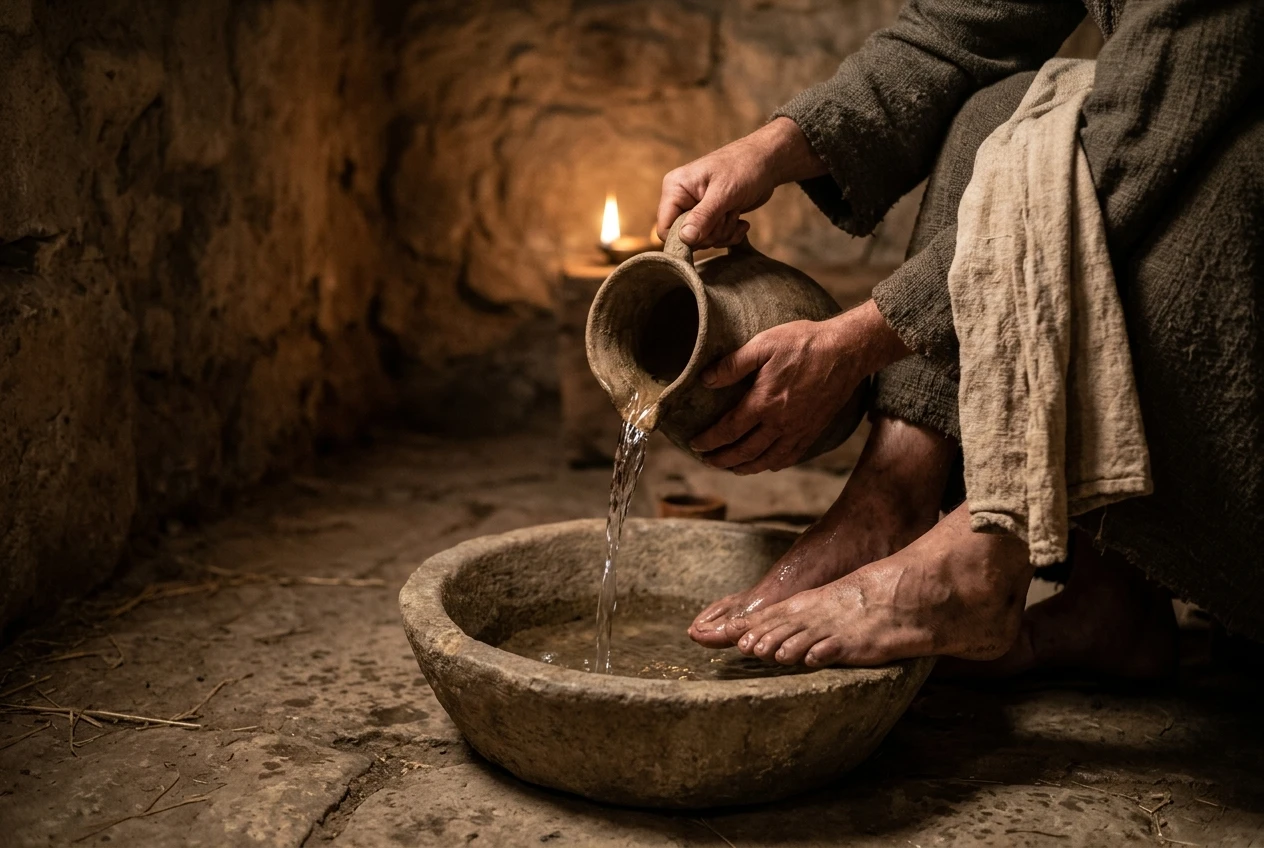
Paul then points to Christ, who did not cling to his position but “made himself nothing” and became a servant, humbling himself to death on a cross (2:6-8). Humility, in this passage, is a decision about how to use power and position, not a feeling of being small.
Here is what that can look like in ordinary places:
- At work: Give credit to a colleague by name when a project goes well. Do the unseen part of the job as carefully as the part your manager will notice.
- Online: Before posting, ask what the post is for. If the answer is mostly to be admired, you have learned something about your motive. Celebrate other people’s good news without a hint of competition.
- At home: Take the task nobody wants. Listen to a family member to the end before offering your view.
Philippians 2:12-13 also keeps the balance right: “Work out your salvation with fear and trembling, for it is God who works in you to will and to act in order to fulfil his good purpose.” You do the work, and God is at work in you while you do it.
How God Uses Hard Seasons to Build Character (Romans 5 and James 1)
Character is not only built when things go well. Paul writes that “we also glory in our sufferings, because we know that suffering produces perseverance; perseverance, character; and character, hope” (Romans 5:3-4). James says to consider trials pure joy because “the testing of your faith produces perseverance,” and perseverance should finish its work “so that you may be mature and complete, not lacking anything” (James 1:2-4).

These verses do not say suffering is good in itself, and they do not promise that every hard season will end quickly or make sense. They say God can use difficulty to produce endurance and maturity in those who trust him. Some trials expose character more than they build it: the impatience, resentment or fear that stays hidden while life is comfortable.
A practical way to respond is to ask two questions when a season turns hard. What is this showing me about myself? And what does God’s Word say about how to respond? Honest answers give the Spirit something specific to work with. For more on staying faithful when trials come, see Faith anchors you in the storm.
Five Small Practices for This Week That Train the Heart, Not Just the Behaviour
None of these earns anything with God. They are ways of placing yourself where the Spirit usually works: in Scripture, in prayer and in obedience to what you already understand.
- Read Philippians 2:1-11 once a day for a week, slowly. Each day, pray one line of it back to God. Ask him to show you where you are looking to your own interests.
- Name your motive before you act. Before a conversation, a post or a favour, ask what you want from it. If the honest answer is approval, tell God, and ask him to give you a better reason.
- Do one hidden act of service. Do something helpful that nobody will see or credit. Notice how you feel about the lack of recognition.
- Tell the plain truth in small things. Following Ephesians 4:25, drop the exaggeration, the convenient excuse and the flattering edit of a story. Small honesty trains larger honesty.
- Celebrate someone else’s success on purpose. Pray for a person whose achievement stirs envy in you, and tell them you are glad for them. Envy weakens when it is turned into blessing.
A daily habit of reading Scripture makes all five easier to keep. If you are unsure how to fit that into a full week, How to Build a Bible Study Habit That Survives a Busy Week offers a practical way to begin.
Expect progress to be uneven. You will fail some days, and the right response is to confess it, receive forgiveness and begin again with the Spirit’s help. Character grows over years, and Paul’s confidence is that God “who began a good work in you will carry it on to completion” (Philippians 1:6).
Take the Next Step
Pick one area of character from this article, such as patience, honesty or humility, and work on it this week. Choose one practice from the list above, pray about it each morning and notice where it is tested.
Then join the Bible Literacy Teacher email newsletter for a short Bible-based reflection to keep you growing.